MARIECLAIRE ST JOHN

Marieclaire St John (b.1987 Milan, Italy) lives and works in New York City.
Marieclaire graduated from the University of Southern California in 2009 with a B.A. in Communication and Fine Art and began her career in art and fashion in Los Angeles.
MSJ moved to New York in 2011 where she attended graduate school at Parsons School of Design, worked as a designer at Ralph Lauren and founded her acclaimed label, DRESSHIRT as an homage to her painter’s uniform, a man’s shirt.
In 2017 Marieclaire was named a Forbes 30 Under 30 honoree in the Art & Design category.
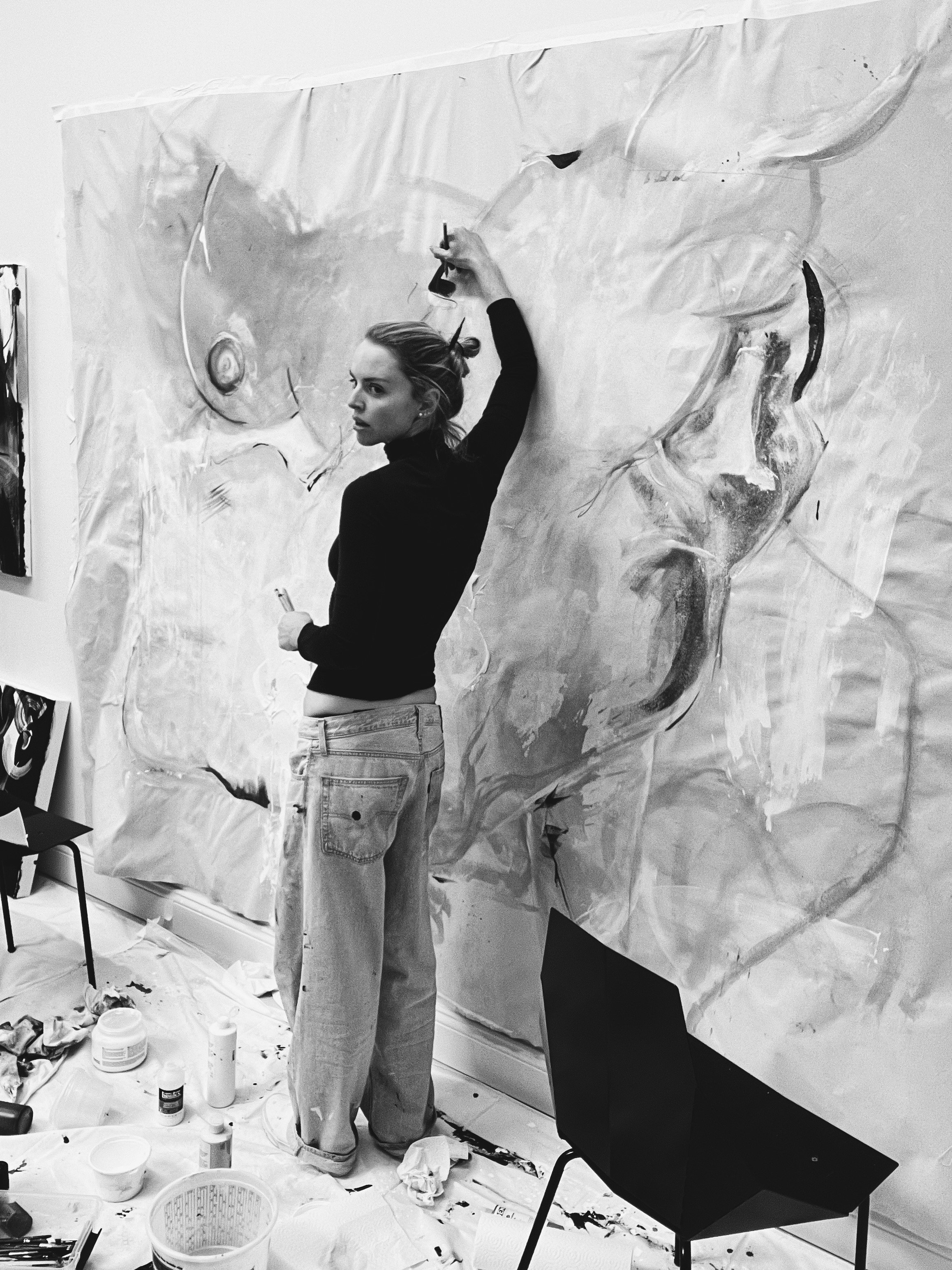
Marieclaire’s autobiographical body of work explores themes related to the female experience, predominantly objectification, sexuality, motherhood and pain. She works primarily in acrylic paint, using a vocabulary of abstracted motifs derived from figurative drawing studies.
Marieclaire’s earlier works referenced hard-edge painting and were constructed by “perfecting” these motifs using meticulous application of matte vinyl paint, then naturally distorting them by pouring liquid acrylics on top, which morph over time before drying into glossy puddles on the surface.
Referencing Lee Krasner’s quote, “You can have giant physical size with no statement on it, so that it is an absurd blow-up of nothingness, and vice versa, you can have a tiny painting which is monumental in scale”, Marieclaire painted hundreds of tiny works that intersected with one another when hung together, but also stood alone, observing the fragmented and changing perception of her womanhood throughout the pregnancy and birth of her first child.
During the pandemic, after a traumatic birth and struggling with postpartum anxiety, Marieclaire combined the vinyl paint with the pouring medium, using repetitive single strokes within the motifs, leaving tracks representative of a labyrinth, which became a new signature element of her work.
Since 2020, Marieclaire’s work has become increasingly expressive. Using a variety of different mediums, surfaces and techniques, but with a continued reference to her original lexicon of figurative motifs.